Table Of Contents
Betty Hill (neé Lyons) and I wrote a journal article about Onondaga Lake. Then we made a podcast with the same name, and the podcast does things the article can't.
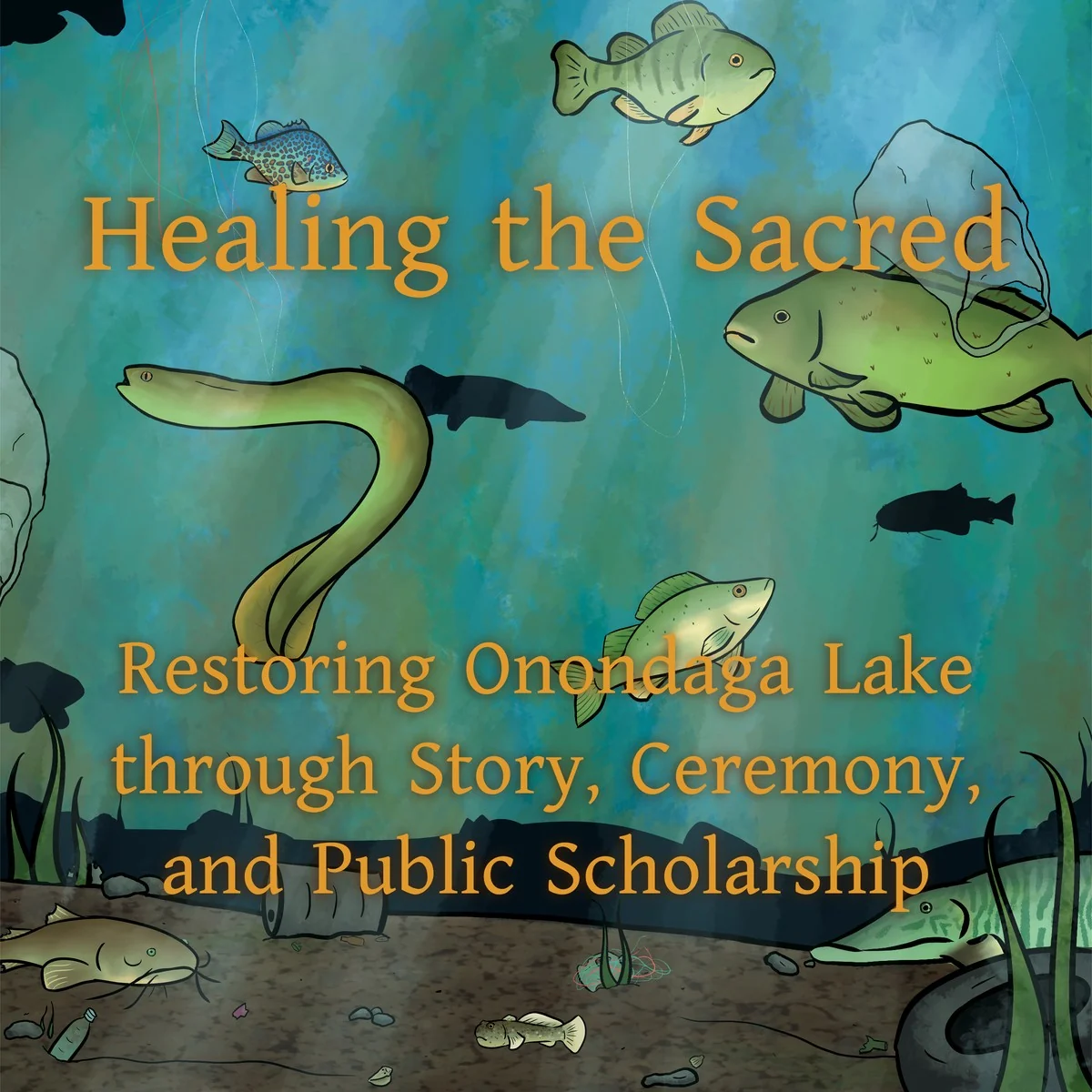
The article is "Healing the Sacred: The Fight to Restore Onondaga Lake and Honor Indigenous Land" in the International Journal on Responsibility (vol. 9, no. 1). The podcast is Healing the Sacred: Restoring Onondaga Lake through Story, Ceremony, and Public Scholarship, 11 episodes from the American Indian Law Alliance (AILA).
I will argue that the podcast is better public scholarship than the article, by showing who speaks in it and what a classroom can do with it.
What the Article Argues #
The article starts from a legal fact. The Onondaga Nation is petitioning the Organization of American States (OAS) for land rights to Onondaga Lake, the sacred site where Gayanashagowa (the Great Law of Peace) was established.
Betty and I set Haudenosaunee teachings beside the Doctrine of Christian Discovery. We use Steven T. Newcomb's Domination Code to read how settler colonial law justified the extraction that left the lake polluted. We argue that returning the lake to the Onondaga Nation is a vital step toward healing for its people, the surrounding communities, and the natural world. (I posted the abstract here last year.)
I hold that argument today. But an article has a shape. Two authors make the case, and everyone else arrives in quotation marks and footnotes.
Who Speaks in the Podcast #
The podcast turns that shape around. Betty, Patricia Nolan Vogt, and I ask the questions, and 8 guests do most of the talking.
Tina Thomas and Sarah Shute of the Skä•noñh Great Law of Peace Center describe the bald eagles returning to nest on the lake. Jake Edwards (Onondaga Nation, Eel Clan) talks about the Thanksgiving Address. Rex Lyons (Onondaga Nation, Eel Clan) explains lacrosse as a medicine game.
Tadodaho Sidney Hill speaks about the Peacemaker. Joseph J. Heath, General Counsel for the Onondaga Nation, walks through the Onondaga land rights action. Ciarrai Eaton, executive director of the Matilda Joslyn Gage Foundation, traces what Gage learned from Haudenosaunee women.
The story of the lake belongs first to the people who carry it. In the article I could only cite them. Here you can hear them.
Episode 9 and the Two Row Wampum #
I hosted Episode 9 with Richard W. Hill Sr., the Tuscarora artist, historian, and educator. He describes the Great Law of Peace as a living framework for peace and for responsibility toward the Earth.
Then he explains the Two Row Wampum: a canoe and a ship travelling side by side, each people keeping to its own vessel. Hill treats a treaty as a relationship that both partners have to keep up, and he frames getting land back as restoring sacred relationships.
I've written about the Two Row Wampum as theory and method in my own research. The Two Row also describes my job as a host in this series (stay in my own vessel and keep my hands off the paddle).
If the Doctrine of Discovery is new to you, the Doctrine of Christian Discovery podcast is a good place to start.
A Free Curriculum Guide for Your Classroom #
Betty and I also wrote a curriculum guide. It follows the series episode by episode, and each episode gets a description, 5 discussion questions, and a short list of additional resources.
At least 3 of the 5 questions can be answered from the episode alone. So you can assign an episode on a Monday and hold a discussion on Wednesday with no other reading.
The resource lists begin with the Onondaga Nation's own pages and with Haudenosaunee authors. Primary documents come next, then scholarship and journalism. That order is the argument of the whole project in miniature.
Every episode has a transcript. The guide is a free PDF, and the page offers citation files (RIS, CSL JSON, and BibTeX) for Zotero or whatever reference manager you use.
How to Listen, Share, and Link #
Listen at podcast.lakeback.org, on Apple Podcasts, or on Spotify. AILA's announcement has an episode-by-episode listening guide.
The podcast site is licensed CC BY 4.0, so you can share and reuse its content with attribution. Put an episode on your syllabus or your library guide, and link to it from your own site.
When you finish listening, visit lakeback.org. It's the home of AILA's campaign to return Maple Bay (on the northwest shore of Onondaga Lake) to the Onondaga Nation.
Thanks #
AILA funded the series, with help from the inaugural Public Scholarship Grant of the American Academy of Religion. Victoria Dickerson made the artwork (look closely at what the fish are swimming past). Chris Thomas (Onondaga Nation, Beaver) made the music.
Tags : publication podcast public-scholarship doctrine-of-discovery indigenous-studies haudenosaunee pedagogy open-access
Webmentions
No webmentions yet.